

Our Tampa Limo Blog
How to Book Wedding Transportation for Guests, Step by Step
Quick Summary
To book wedding transportation for guests, first decide whether they need rides, then convert your guest count into seats, trips and vehicles. Book early, ideally three to four months before the wedding, and confirm every detail in writing with the provider.
- Transportation is worth considering if guests face an unfamiliar area, limited parking, alcohol, or night driving.
- Add a buffer of 10 to 15 percent to your guest count for plus-ones and last-minute changes.
- Plan separate waves for each trip and calculate vehicles from round-trip loop time.
- Request quotes and book your provider three to four months before the wedding.
- Read the contract for hourly minimums, overtime rates and waiting-time policies before signing.
Table of Contents
- Deciding Whether Your Guests Need Wedding Transportation
- Estimating Guest Count and Transportation Demand
- When to Book Wedding Transportation Without Last-Minute Stress
- Choosing Vehicle Types and Planning Routes Between Venues
- Understanding the Cheapest Way to Transport Wedding Guests
- Wedding Transportation Etiquette and Guest Communication
- Booking a Wedding Shuttle Service: Checklist, Contract Checks, and Day-Of Backup Plans
- Confirming Your Wedding Transportation Plan With Prestige Black Car Service
- Frequently Asked Questions
Deciding Whether Your Guests Need Wedding Transportation
Last Updated: November 8, 2026
Not every wedding needs a shuttle. But if guests will travel to an unfamiliar venue, or if drinking and driving is a real risk, planning transportation early saves stress.
Start by looking at your venues. If the ceremony and reception sit in the same place, guests may only need parking directions.
Ask yourself these questions:
- Will guests need to park in an unfamiliar area?
- Are there limited parking spots or paid lots nearby?
- Will guests drink alcohol at the reception?
If you answered yes to two or more, transportation is worth considering.
Estimating Guest Count and Transportation Demand
Once you decide transportation makes sense, you need to know how many people will ride, and how many seats, trips, and vehicles that translates into. Convert your headcount into a capacity plan you can hand to a provider.
Start with your guest list, then remove guests who will drive themselves or stay local. A simple method works well:
- Count your total invited guests.
- Subtract guests who plan to drive alone.
- Estimate how many guests will attend the reception and need a ride back to the hotel.
For example, if 120 guests are invited and about 80 need rides, plan for roughly 90 seats. That number helps you choose between a sprinter van, a mini bus, or several black cars.
Turning Guest Count Into Seats, Trips, and Vehicles
A seat count is not the same as a vehicle count. Use this calculation method to build a plan you can compare across providers:
- Riders per wave. If 90 guests need a ride to the ceremony and 90 back, you have two waves of 90, not one wave of 180.
- Seats per vehicle. Use realistic capacity, not the maximum. Plan for a realistic load rather than the maximum seating figure, allowing room for coats, bags, and older guests.
- Trips per wave. Divide riders by realistic seats per vehicle, then round up. Ninety riders at 20 per mini bus means five trips per wave, or fewer vehicles making multiple loops.
- Loop time. Measure the drive from pickup to drop-off, add 10 to 15 minutes for loading and unloading, then double it for the return leg. A 20-minute drive with 15 minutes of boarding becomes a 70-minute round loop.
- Vehicles needed. Divide the total time you need to move all riders by the loop time. If you must move 90 riders in a 45-minute window and each loop takes 70 minutes, one vehicle cannot do it; you need multiple vehicles running in parallel or a staggered schedule.
A common pattern is to overbook seats and underbook vehicles. Plan by wave and loop time, not by total headcount alone.
Building in Buffer Time and a Second Wave
Buffer time keeps the schedule from collapsing when one guest is late or traffic slows a loop.
If your venue has a single loading zone, plan a second wave rather than cramming everyone into one departure.
Confirm your final headcount with your provider well before the wedding so you can adjust vehicles and rerun the wave-and-loop math with real numbers.
The article walks through how to turn a guest count into seats, trips and vehicles, so the key figures are summarised below.
| Step | What to do | Note |
|---|---|---|
| Count invited guests | List everyone invited | Starting point |
| Subtract self-drivers | Remove guests driving alone or staying local | Leaves guests who need rides |
| Add buffer | Add 10 to 15 percent | Covers plus-ones and changes |
| Riders per wave | Plan separate waves for each trip | Not one combined wave |
| Trips per wave | Divide riders by realistic seats, round up | Use realistic, not maximum, capacity |
| Loop time | Add 10 to 15 min loading, double for return | Sets how many vehicles you need |
| Buffer for delays | 10 to 15 min per stop, 15 to 20 min per leg | Prevents cascading delays |
When to Book Wedding Transportation Without Last-Minute Stress
Timing matters more than most couples expect. You can find more stress-free ways to book wedding transportation in Tampa here. For a full walkthrough of timing and coordination, see how to coordinate wedding rides in Tampa.
A practical timeline looks like this:
- 6 to 9 months before: Set your budget and decide on the type of transportation.
- 3 to 4 months before: Request quotes and book your provider.
- 4 to 6 weeks before: Send final pickup details to your transportation company.
Booking early also protects you from schedule conflicts. If your ceremony time changes, a provider with open availability can adjust more easily.
Watch out: Do not wait until the final month to request a shuttle for a Saturday wedding. Availability can disappear quickly during wedding season.
Choosing Vehicle Types and Planning Routes Between Venues
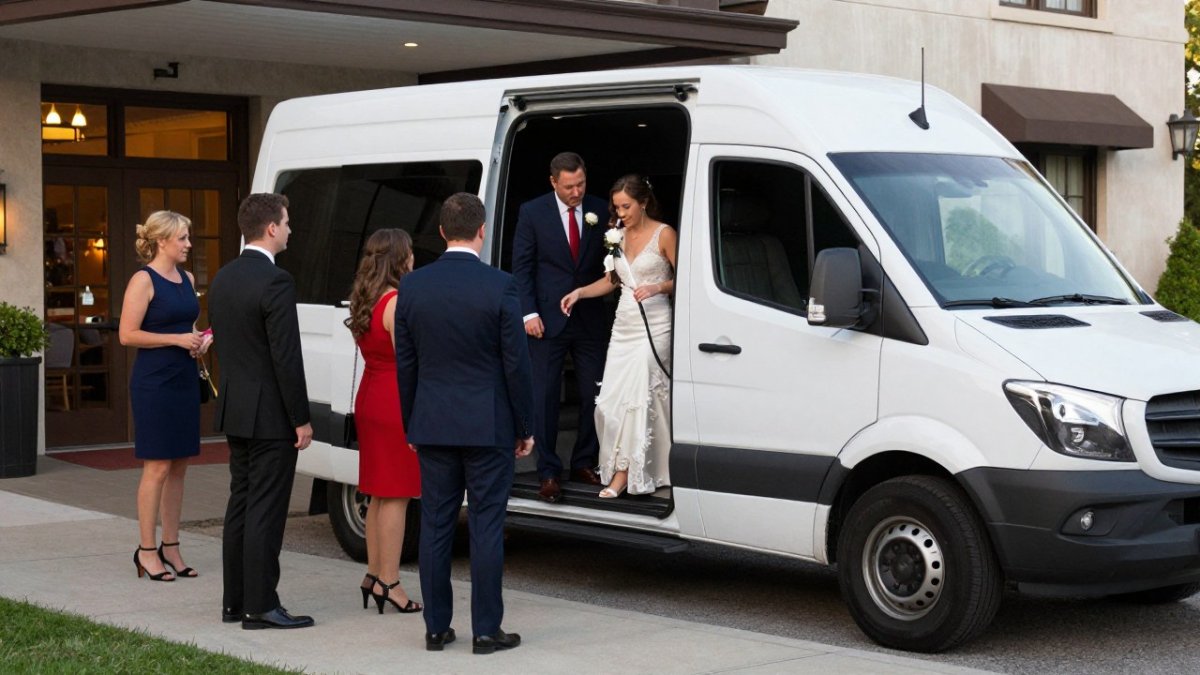
The right vehicle depends on your guest count, route, and budget. Compare options in our guide to choosing the right black car limo service for your Tampa wedding. Most couples choose from a few common options:
Route planning is just as important as vehicle size. Map each stop on a single document: hotel, ceremony site, photo location, and reception venue. Note how long each leg takes at the time of day you plan to travel.
Setting Pickup Locations and Building the Pickup Schedule
Choose pickup locations that are easy to find and safe for guests to wait at. Hotel lobbies and main entrances work well. Avoid side streets or unlit parking lots.
Create a pickup schedule with these details:
- Pickup location and address
- Pickup time, with a 10 to 15 minute cushion
- Destination and expected arrival time
Share this schedule with your guests through your wedding website or a printed card. Clear information prevents most transportation problems.
Understanding the Cheapest Way to Transport Wedding Guests
Many couples ask for the cheapest way to transport wedding guests. The answer depends on how far guests travel and how many need rides. The right option depends on your route, guest count, and budget.
Pricing depends on factors such as vehicle type, service hours, route, date, and terms, so request a quote for your specific event.
For current pricing, request a custom quote through Prestige Black Car Service's website.
Here are ways to reduce costs without cutting safety:
- Use one shuttle for the main route instead of several cars.
- Book a shorter service window that covers only essential trips.
- Combine ceremony and reception transportation into one contract.
Wedding Transportation Etiquette and Guest Communication
Good communication keeps guests comfortable and on time. Tell guests about transportation early, ideally on your wedding website and in invitation follow-ups. Explain where to meet, when the vehicle leaves, and whether rides are free or paid.
Etiquette tips include:
- Let guests know if rides are included or if they need to pay.
- Offer accessible vehicles for guests who need them.
- Thank your drivers and tip them according to your provider's guidelines.
Booking a Wedding Shuttle Service: Checklist, Contract Checks, and Day-Of Backup Plans
When you are ready to book, treat the process as a sequence of milestones rather than a single phone call. The checklist below covers quotes, contracts, deposits, insurance, cancellation terms, and confirmation milestones.
Booking Checklist and Confirmation Milestones
- Confirm the date, start time, and total service hours
- Get written quotes from at least three providers
- Ask about deposit amounts and cancellation terms
Set confirmation milestones so you are not chasing details in the final week:
- At booking: signed contract, deposit receipt, and written itinerary.
- Four to six weeks out: final headcount, wave schedule, and pickup addresses confirmed in writing.
- One week out: driver names, vehicle descriptions, and operations contact number confirmed.
Provider Due Diligence: Questions to Ask Before You Sign
A low quote is not a saving if the provider cannot fulfill the booking. Ask these questions and get answers in writing:
- Licensing and insurance. Ask for the provider's operating authority and certificate of insurance, and confirm the coverage limits. A legitimate operator will share these without hesitation.
- Vehicle condition and age. Ask how old the vehicles are and whether they are inspected. Ask to see photos of the actual vehicle, not a stock image.
- Backup vehicles. Ask how many backup units the provider keeps and how quickly one can be dispatched.
Reading the Contract: Clauses That Change Your Cost
Read the contract carefully. Look for minimum hour requirements, overtime rates, and fees for route changes. The clauses most likely to change your final bill are:
- Hourly minimums. Many providers bill a minimum number of hours even if your event runs shorter.
- Overtime. Confirm the overtime rate and how it is triggered, per hour or per quarter hour.
- Waiting time. Ask whether the meter runs during loading, photos, or ceremony delays.
Watch out: Do not sign a contract that lists a per-vehicle rate without stating the minimum hours, overtime rate, and waiting-time policy, those three clauses decide what you actually pay.
Day-Of Backup Plan and Contingency Operations
Create a day-of backup plan before the wedding week. Keep the operations contact number on hand, assign one family member to monitor the schedule, and have a rideshare option ready for guests who miss the shuttle.
A workable contingency plan covers the most common failures:
- Late vehicle. The assigned family member calls the operations number, confirms the new arrival time, and holds guests at the pickup point rather than letting them scatter.
- Traffic delay. The driver or dispatcher updates the schedule, and the point person tells the venue to hold the ceremony or reception start if needed.
- Missed shuttle. Keep a rideshare or taxi option ready for guests who miss a departure, and give them the next wave time.
Write the backup plan down and share it with your wedding planner, the point person, and the provider. A plan that lives only in your head is not a plan.
Confirming Your Wedding Transportation Plan With Prestige Black Car Service
Once your plan is set, confirm every detail in writing. Check vehicle counts, pickup times, route stops, and driver contact information one final time. Share the confirmed schedule with your wedding planner and close family members.
Prestige Black Car Service provides premium private transportation across the Tampa Bay region. If you want help choosing a vehicle or building a route, book a wedding transportation consultation to discuss your timeline.
Frequently Asked Questions
When should you book wedding transportation for guests?
Book as soon as you have a confirmed guest count and a final venue schedule, ideally several months ahead for peak wedding weekends in Tampa Bay. Early booking gives you more vehicle options and pickup times that fit your timeline. Ask any provider to confirm availability for your date in writing, and request a quote that clearly lists all costs so there are no surprises. For current rates and availability, contact Prestige Black Car Service directly through its website.
How many wedding shuttles do you need for your guests?
Start by dividing your confirmed guest count by the seating capacity of the vehicle type you are considering, then add a buffer of one seat per vehicle for luggage and last-minute additions. For example, a group of 45 guests would need enough vehicles at a realistic seating capacity, so confirm capacity with your provider. Consider whether guests will travel in one direction only or need return trips, since return runs double the vehicle hours. Confirm capacity with your provider before signing.
What is the cheapest way to transport wedding guests?
Shared transportation can reduce the number of vehicles you need compared with booking many individual cars. Schedule fewer, fuller runs and avoid paying for idle time by building tight pickup windows. Some couples cover only the trip to and from the reception, leaving the rest to guests. Compare quotes on a per-hour and per-trip basis, and factor in minimum rental hours, deposits, and gratuity before deciding.
What should you tell guests about wedding transportation?
Share pickup locations, departure times, return schedules, and the name of the transportation provider in your wedding website or invitation follow-up. Make clear whether transportation is included or optional, and give a deadline for guests to reserve a seat if seats are limited. Include a contact number for day-of questions and note any accessibility options, such as vehicles with wheelchair lifts, so guests can plan ahead.
‹ Back
Recent Posts
-

How to Book Wedding Transportation for Guests, Step by Step
November 10, 2026
-

How to Find a Car Service Quickly When You Need One
November 9, 2026
-
Can You Prebook Tampa Airport Transportation for Late Flights?
November 9, 2026
-
How to Manage Executive Travel Logistics in 2026
November 8, 2026
-

How to Schedule Recurring Airport Pickups Step by Step
November 7, 2026