

Our Tampa Limo Blog
How to Ensure Clean Luxury Vehicle Standards
Table of Contents
- What Defines Clean Luxury Vehicle Standards
- Pre-Wash Inspection and Preparation
- Exterior Washing and Paint Protection
- Luxury Car Interior Cleaning Essentials
- How to Clean Leather Car Seats Properly
- Wheels, Tires, and Undercarriage Care
- How Often to Detail a Luxury Car
- Creating Your Luxury Car Cleaning Checklist
- Frequently Asked Questions
Last Updated: October 11, 2026
What Defines Clean Luxury Vehicle Standards
Clean luxury vehicle standards represent a measurable level of cleanliness that protects your investment and maintains appearance, value, and longevity, far beyond a basic wash.
A truly clean luxury vehicle means:
- Spotless exterior paintwork free from swirl marks, scratches, and contamination
- Interior surfaces that are dust-free, conditioned, and protected
- Wheels and tires cleaned separately with appropriate products
- No water spots, residue, or buildup on any surface
Luxury vehicles require specialized care. The difference between a clean car and clean luxury vehicle standards comes down to technique, product selection, and consistency.
Pre-Wash Inspection and Preparation
Before washing, inspect your vehicle to prevent spreading contaminants and identify problem areas needing special attention.
Start by examining the exterior in bright daylight. Look for:
- Tree sap or bird droppings that require pre-treatment
- Tar spots on the lower body panels
- Heavy dirt buildup in wheel wells and undercarriage
- Paint contamination that feels rough to the touch
Check the interior for dust accumulation, spills, or stains. Open all doors, windows, and the trunk to assess what needs attention. This inspection takes 10-15 minutes but saves you from mistakes during washing.
Choose a shaded location, direct sunlight causes water spots and streaks. Gather all supplies before starting to avoid mid-wash interruptions.
Exterior Washing and Paint Protection
The exterior wash is where most damage occurs. Your clear coat is delicate, one careless motion creates swirl marks that permanently diminish the finish.
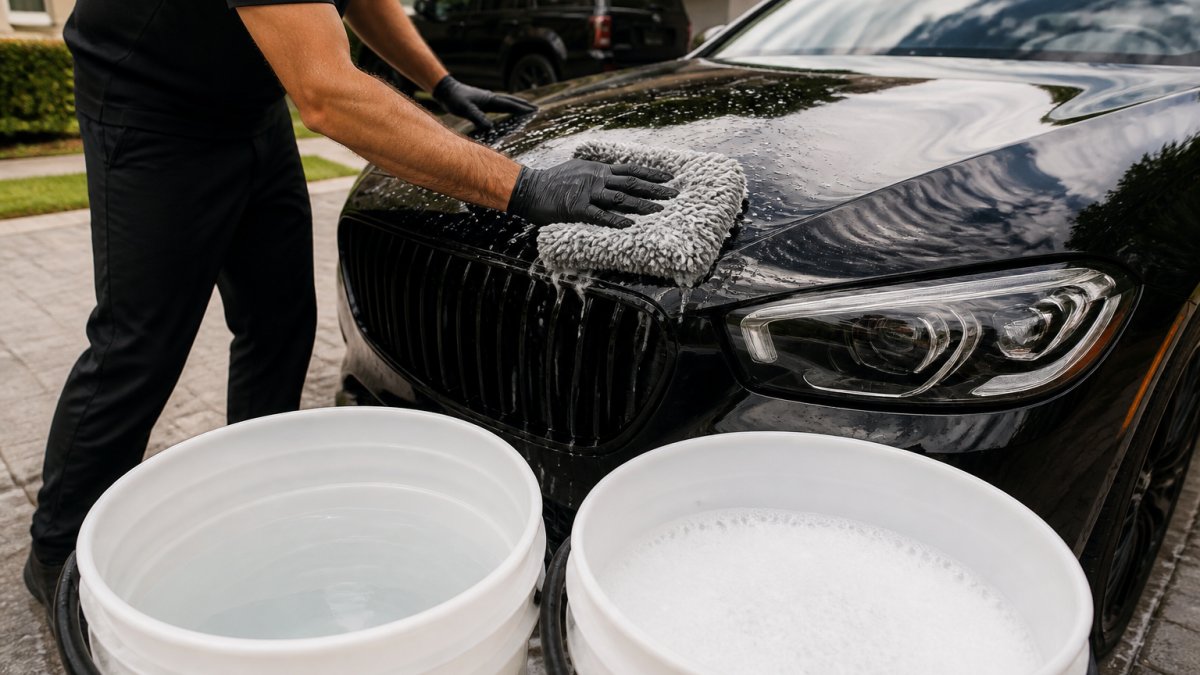
Rinse the entire vehicle with a gentle spray pattern (never a pressure washer) from top to bottom, removing loose dirt before contact washing.
The Two-Bucket Method for Safe Washing
The two-bucket method prevents dirt from being dragged across paint: one bucket holds soapy water, the second holds clean water for rinsing your mitt.
Use pH-neutral car shampoo only, never dish soap, which strips protective coatings. Use the recommended amount; more soap doesn't improve results.
Use straight-line motions (not circular, which creates swirl marks). Rinse your mitt in clean water after each section. Work top to bottom, rinsing immediately after washing to prevent soap residue.
Preventing Swirl Marks and Scratches
Swirl marks result from dragging dirt across paint. Use only microfiber mitts and towels, avoid sponges or rough cloths. Apply light pressure; let soapy water do the work.
Dry your vehicle with a dedicated drying towel, not the same cloth you used for washing. Microfiber drying towels absorb water quickly and prevent water spots. Chamois leather also works well but requires careful handling to avoid damage.
Luxury Car Interior Cleaning Essentials
Interior cleanliness affects driving experience and resale value. Luxury vehicles contain diverse materials requiring material-specific protocols, wrong products cause permanent damage.
Pre-Cleaning Inspection and Material Assessment
Identify every material in your interior before cleaning. Consult your owner's manual and take reference photos to prevent cross-contamination and product mismatches.
Vacuum thoroughly with a soft-bristle attachment before wet cleaning, paying special attention to crevices and vents. Loose particles cause scratches during wet cleaning.
Leather Seat and Trim Care
Vacuum leather with soft brush attachment only. Use leather-specific cleaner on a microfiber cloth, wiping gently in straight lines. Allow 30-60 seconds before wiping residue. Condition after cleaning to restore suppleness. Protect from direct sunlight and address stains promptly by blotting (never rubbing).
Alcantara and Suede Trim Cleaning
Vacuum Alcantara with soft brush only. For light dust, use a suede brush. For stains, use Alcantara-specific cleaner sparingly on a microfiber cloth and dab gently. Protect from moisture and direct sunlight.
Carbon Fiber and Piano-Black Trim
Carbon fiber and piano-black plastic trim are common in luxury vehicle cabins but require different approaches.
Clean carbon fiber with microfiber cloth and mild cleaner, avoiding silicone products. Protect with clear sealant. For piano-black plastic, use microfiber cloth with distilled water or dedicated cleaner, wiping dry immediately. Avoid alcohol-based products and apply protectant after cleaning.
Glass and Matte Paint Surfaces
Use automotive glass cleaner on a microfiber cloth (never household cleaners). Spray cleaner on cloth, not screen, to prevent liquid damage. For matte trim, use dedicated matte-finish cleaner with gentle straight-line motions, avoiding wax products.
High-Touch Surface Disinfection
Use leather-specific disinfectant for leather/Alcantara surfaces; automotive-specific wipes for hard plastic. Avoid bleach-based products. Wipe high-touch areas weekly.
Addressing Spills and Stains by Material
Immediate action prevents permanent damage. The approach depends on the material affected.
On leather: Blot immediately with a clean, dry cloth. Never rub. If liquid remains, use a cloth slightly dampened with distilled water to blot again. Allow to air dry. Once dry, apply leather conditioner to prevent water staining.
On Alcantara: Blot immediately with a clean cloth. Do not apply water. Allow to air dry completely. If a stain remains after drying, consult an Alcantara-specific stain remover or seek professional cleaning.
On carpet or fabric: Blot with a clean cloth to absorb liquid. Do not rub, which pushes liquid deeper. Once surface moisture is removed, apply a fabric-safe stain remover following product instructions. Blot again and allow to air dry.
Book our black car service now! →
On hard plastic or carbon fiber: Wipe immediately with a dry microfiber cloth. If residue remains, use a cloth slightly dampened with distilled water or a dedicated interior cleaner appropriate to the material.
How to Clean Leather Car Seats Properly
Leather requires specific care to maintain its suppleness and appearance. Improper cleaning can crack, fade, or damage the material. The right approach keeps leather looking new for years.
Start by vacuuming leather seats with a soft brush attachment. This removes dust and debris before any liquid cleaning. Never use high suction directly on leather, which can pull fibers.
Use a leather-specific cleaner, never all-purpose products. Apply the cleaner to a microfiber cloth, not directly to the leather.
Condition leather after cleaning. Conditioning oils restore suppleness and protect against cracking. Apply conditioner with a soft cloth, using light pressure.
Protect leather from direct sunlight, which causes fading and cracking. Park in shaded areas when possible. Use sunshades during extended exposure. This simple step prevents damage that's difficult to reverse.
Address stains promptly. Fresh stains respond better to cleaning than old, set-in marks. Blot fresh spills immediately with a clean cloth.
Wheels, Tires, and Undercarriage Care
Use neutral pH wheel cleaner (safer than acidic) and scrub with a soft-bristled brush separate from body wash. Clean tires with tire-specific cleaner. Rinse undercarriage with gentle spray to remove corrosive salt and debris.
How Often to Detail a Luxury Car
Detailing frequency depends on driving habits, climate, and storage. The real measure is whether your vehicle meets observable cleanliness criteria, not calendar dates.
Defining Observable Cleanliness Standards
Establish observable cleanliness standards: paint free of swirl marks and water spots; glass streak-free; wheels free of brake dust; interior dust-free with no stains; undercarriage free of salt and corrosion. Detail when standards fall below criteria, not by calendar date.
Recommended Detailing Schedules by Driving Conditions
Professional detailing every 3-6 months suits most owners. Harsh climates (road salt, sand) require 2-3 month cycles; moderate climates 4-6 months; mild climates 6-12 months. Outdoor parking adds one detail yearly; garage storage reduces frequency by one cycle. Between details: bi-weekly hand wash and weekly interior vacuuming.
Seasonal Adjustment Strategy
Spring: Detail early to remove winter salt before damage occurs. Summer: Apply protective coatings and condition leather. Fall: Detail before winter and apply undercoating if needed. Winter: Increase wash frequency to 2-3 weeks in salt regions, focusing on undercarriage.
Maintenance Between Professional Details
Weekly: Vacuum interior and wipe high-touch surfaces. Bi-weekly: Hand wash exterior and wipe interior hard surfaces. Monthly: Deep vacuum, condition leather, clean wheels, rinse undercarriage. Quarterly: Clay bar treatment and detailed inspection.
Creating a Detailing Schedule Tracker
Document your detailing history to identify patterns and optimize your schedule.
Track the following for each detail:
- Date completed
- Type of detail (hand wash, professional detail, clay bar treatment)
- Weather and driving conditions since last detail
- Specific issues addressed (stains, contamination, damage)
- Products used
- Time required
- Observable condition before and after (using the cleanliness standards above)
After 6-12 months of tracking, patterns emerge. You'll identify how quickly your vehicle accumulates contamination under your specific conditions. Use this data to adjust your schedule. If your vehicle consistently falls below cleanliness standards after 5 months, move to a 4-month cycle. If it remains clean for 7 months, you can extend to 6 months.
This data-driven approach prevents both over-detailing (wasting time and resources) and under-detailing (allowing damage to accumulate).
Creating Your Luxury Car Cleaning Checklist
A comprehensive checklist ensures you don't miss critical steps. This tool transforms cleaning from a vague task into a systematic process with measurable results.
Your checklist should cover:
- Pre-wash inspection for damage or contamination
- Exterior rinsing and two-bucket washing
- Paint drying and water spot prevention
- Wheel and tire cleaning
- Interior vacuuming and surface wiping
- Leather conditioning and protection
- Final inspection for missed spots
- Product and tool storage
Print or save this checklist and use it every time you clean. Consistency matters more than perfection. A vehicle cleaned systematically every month stays cleaner than one cleaned intensively once a year.
Track your cleaning dates. This record helps you identify patterns in dirt accumulation and adjust your schedule accordingly. It also provides documentation of your maintenance care if you ever sell the vehicle.
Customize your checklist based on your vehicle's specific needs. If your car has suede interior trim, add conditioning steps for that material. If you frequently drive on dusty roads, add extra undercarriage rinsing.
Maintaining clean luxury vehicle standards protects one of your most significant investments. At Prestige Black Car Service, we know that professional-quality results come from understanding your vehicle's specific needs and committing to consistent care.
Frequently Asked Questions
What steps should you take to ensure a vehicle is clean and organized?
Start with a thorough inspection of exterior and interior surfaces for dirt, dust, and debris. Rinse the vehicle from top to bottom using low-pressure water to remove loose contaminants. Wash with pH-neutral car shampoo using the two-bucket method to prevent scratches. Clean wheels and tires separately with appropriate products. Vacuum and wipe down the interior, including leather seats with proper conditioner. Dry with microfiber towels to prevent water spots. Finally, inspect high-touch surfaces and ensure all compartments are organized and free of clutter.
How often should a luxury vehicle be cleaned?
Luxury vehicles should receive a thorough exterior wash every two weeks under normal driving conditions, or weekly if exposed to harsh weather, salt air, or frequent travel. Professional detailing, including clay bar treatment, wax application, and deep interior cleaning, should occur every three to six months to maintain paint protection and material condition. High-touch surfaces and leather seats benefit from weekly cleaning to prevent wear and maintain their premium appearance and feel.
How can you clean leather seats without damaging them?
Use only pH-neutral, leather-specific cleaners designed for automotive interiors. Vacuum seats first to remove loose debris. Apply cleaner with a soft microfiber cloth using gentle circular motions, working on one section at a time. Avoid scrubbing or using abrasive materials. Wipe away cleaner residue with a damp cloth, then dry thoroughly. Follow with a leather conditioner formulated for vehicles to restore moisture and protect against cracking. Test any product on a hidden area first to ensure compatibility with your seat material.
What should a clean luxury car interior look and smell like?
A properly maintained luxury car interior should have no visible dust, debris, or stains on seats, carpets, or trim surfaces. Leather should appear supple and conditioned, not dull or sticky. The cabin should smell fresh and neutral, free of musty odors, mold, or chemical overpowering scents. High-touch surfaces like steering wheels and door handles should be spotless. Carpets and mats should be vacuumed and free of matting. Air filters should be clean to prevent stale or unpleasant cabin air, contributing to an overall impression of meticulous care and premium condition.
‹ Back
Recent Posts
-

How to Book Wedding Transportation for Guests, Step by Step
November 10, 2026
-

How to Find a Car Service Quickly When You Need One
November 9, 2026
-
Can You Prebook Tampa Airport Transportation for Late Flights?
November 9, 2026
-

How to Manage Executive Travel Logistics in 2026
November 8, 2026
-

How to Schedule Recurring Airport Pickups Step by Step
November 7, 2026