

Our Tampa Limo Blog
How to Pick the Best Tampa Wedding Photo Spots for Luxury Transport
Last Updated: November 5, 2026
Quick Summary
The best Tampa wedding photo spots are the ones your luxury vehicle can reach, stop at legally and leave from easily, since vehicle access matters as much as the view. Choose locations by checking drop-off zones, parking and permits before aesthetics. Downtown skyline, historic venues and waterfront parks each carry different access trade-offs.
- Ask whether a vehicle can reach the entrance, stop legally and return without a long walk.
- Downtown has more metered and garage parking, but weekday traffic can slow pickups.
- Rooftop photo spots rarely let vehicles in, so plan street-level drop-off and elevator time.
- Confirm permit and photography rules with the managing agency, not a blog post.
- Work backward from sunset and leave at least 15 to 20 minutes of buffer at each stop.
Table of Contents
- Why Vehicle Access Should Decide Your Wedding Photo Spots
- Downtown Tampa Skyline Views That Park Easily
- Historic Architecture and Venues With Usable Drop-Off Zones
- Waterfront Parks, Piers and Riverwalk Access
- Tampa Wedding Transportation Between Locations: Permits, Parking and Vehicle Size
- Wedding Photo Route Planning and Timing for Golden Hour
- Booking Your Luxury Transport and Locking In Your Photo Route
- Frequently Asked Questions
Choosing a wedding photo spot in Tampa usually starts with the photos. Couples picture the skyline, the historic facades and the waterfront at golden hour. Few plan for the car. A stunning backdrop means little if your bridal party cannot get close to it. This guide looks at Tampa wedding photo spots through the lens of transportation, so the locations you choose work for your photographer and for your luxury transport.
Why Vehicle Access Should Decide Your Wedding Photo Spots
The best photo spot on a shot list can fail on the day if the vehicle cannot reach it. A sedan, limousine or sprinter van needs a clear approach, a place to pull over and a route out. Many couples discover this too late, when the group must walk several blocks in heels or formalwear.
Start with logistics before aesthetics. Ask three questions about every candidate location: Can a vehicle reach the entrance? Is there a legal place to stop for a few minutes? Can the group return to the car without a long walk? Locations that pass all three tend to save time and stress.
Downtown Tampa Skyline Views That Park Easily
Downtown offers some of the most recognizable skyline backdrops in the area. Waterfront blocks and the streets near the bay give couples clean sightlines toward the city. Downtown also has more metered and garage parking than most neighborhoods, which makes staging simpler.
The practical trade-off is traffic and congestion. Weekday afternoons and event days can slow pickups considerably. Plan a drop-off zone a block or two away from the main shot, then walk the group in together. For guidance on lining up pickups and vehicle timing around your shoot, see how to coordinate wedding rides in Tampa. Your driver can circle back while the photographer works.
Rooftop Photography Locations and Access Limits
Rooftop views are striking, but access is the main constraint. Many rooftops require reservations, elevator access and a host who can approve a professional photo session. Confirm permission and any fees before the wedding day. Check whether the venue allows outside photographers and how much time the group can use the space.
Rooftops rarely accommodate vehicles directly. Plan for the car to drop guests at street level or at a valet point, then move the group by elevator. Build that extra time into your photo schedule.
Historic Architecture and Venues With Usable Drop-Off Zones
Tampa's historic districts offer textured brick, ornate facades and classic architecture that photograph beautifully. These areas were built long before modern vehicle access was a priority, so narrow streets and limited curb space can complicate arrival.
Look for venues with a designated entrance for guests and vehicles. A covered drop-off area protects the bridal party from weather and keeps the approach clear. Ask the venue whether it has a loading zone and how long vehicles can stay. A location with a usable drop-off zone often beats a more famous facade that leaves the group walking from a distant lot.
Waterfront Parks, Piers and Riverwalk Access
Waterfront parks and the Riverwalk suit couples who want open views, soft light and room to move, and they are among the most requested backdrops for a luxury arrival shot. The difference between a smooth stop and a stressful one is almost always vehicle access, not scenery. Treat each waterfront candidate as a logistics site first: identify the legal curb, the walk distance in formalwear, and where a chauffeur can wait out of the traffic lane.
Specific Waterfront Stops and What Each Demands of a Luxury Vehicle
Pier and marina areas. Piers and marina promenades photograph well for arrival shots, but vehicle access is usually restricted to a designated drop point, with the pier itself pedestrian-only. Confirm the drop point in advance and check overhead clearance if the approach runs under a structure or into a garage.
Vehicle Constraints That Decide Which Waterfront Spot Works
- Legal stopping zones. Loading zones, fire lanes and bus stops are not interchangeable. A driver who stops in a fire lane to save a two-minute walk creates a real risk on the wedding day.
Waterfront wind can affect hair, veils and décor, so a short sheltered break nearby is worth planning.
Tampa Wedding Transportation Between Locations: Permits, Parking and Vehicle Size
Moving between photo spots takes more planning than most couples expect, and this is where a logistics-first guide earns its keep. Each stop needs a parking plan, a legal stopping point and a vehicle that fits the approach. The goal is a written transit plan that your photographer, driver and planner all work from.
Who Actually Regulates What
Permit and access rules for photo shoots and commercial vehicles are set by the property owner or the public agency that manages the site, not by a single citywide office. In practice you will deal with three kinds of authority:
- City of Tampa departments for public parks, right-of-way and street use. Parks and recreation manages many waterfront and neighborhood parks; transportation and mobility handles right-of-way and curb questions. Confirm current requirements directly with the relevant department, because rules and fees change.
- Hillsborough County for sites outside city limits, including some parks and causeway areas.
- Private venues and property managers for hotels, rooftops, historic buildings and marinas. These set their own photography policies, vendor rules and loading-zone rules, and they can approve or deny a professional shoot independently of any public permit.
A useful rule of thumb: public sidewalks and open public parks are generally the most permissive for casual portraits, while commercial photography, tripod or lighting setups, drone use and vehicle staging are the triggers that most often require permission or a permit. Always verify the current rule with the managing agency rather than relying on a blog post, including this one.
Book our black car service now! →
Permit and Access Transparency: What to Confirm Before Booking
Build a simple permit matrix for your route with one row per stop and these columns: managing authority, whether professional photography needs approval, whether a permit fee applies, whether commercial vehicle staging is allowed, and the contact who confirmed it. Ask each authority these questions in writing:
- Does a professional or commercial photo session require a permit at this site?
- Is there a fee, and how far in advance must it be filed?
- Where may a commercial vehicle legally stop, load and wait?
- Are there time-of-day or event-day restrictions?
- Does the venue allow outside photographers, and for how long?
Record the name and date of whoever answers. That record is what protects your timeline if a rule is questioned on the day.
Parking and Staging by Vehicle Type
Vehicle size shapes which streets, garages and lots work, and the differences are concrete:
For each stop, decide in advance whether the vehicle will (a) drop and leave, (b) drop and wait in a legal spot, or (c) park in a garage or lot. A driver who knows which of the three applies at each stop will not improvise in traffic.
Build the Transit Plan
List every stop in order with the vehicle assigned, the legal stopping point, the parking or waiting option, the estimated time on site and the drive time between stops. Share it with your photographer, driver and planner. Ask your transportation provider which permits and access arrangements they handle and which fall to you. A written plan now prevents a delay later.
Watch out: assuming a permit you saw mentioned online still applies, or that a venue's photography policy matches the managing agency's rule, is the most common way a photo route stalls on the day.
Wedding Photo Route Planning and Timing for Golden Hour
Golden hour, the period shortly after sunrise and before sunset, produces the warm light most couples want. Timing matters because the window is short and traffic patterns change through the day. A route that works at noon may be congested at sunset.
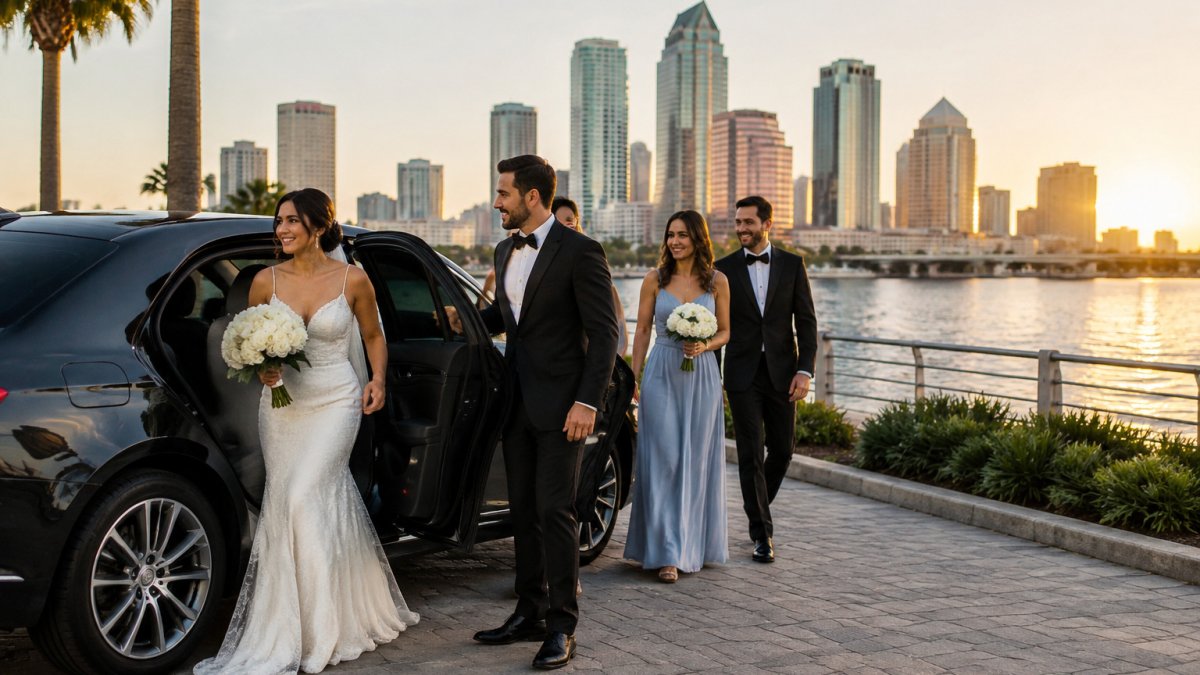
Work backward from the sunset time. Schedule the most important location for the best light, then place the other stops in an order that minimizes driving. Leave a buffer of at least 15 to 20 minutes at each stop to allow for guest pickups, repositioning and unexpected delays.
Consider a two-vehicle plan for larger groups. One vehicle can carry the couple between stops while another handles family and attendants. This keeps the photo timeline on track even if one pickup runs late.
The table below summarises the timing and buffer guidance for building a photo route around golden hour.
| Step | What to do | Time or frequency |
|---|---|---|
| Find sunset time | Work backward from sunset | Before scheduling |
| Place key stop | Schedule most important location for best light | At best light |
| Order other stops | Minimise driving between locations | Plan route in advance |
| Buffer per stop | Allow for pickups, repositioning and delays | At least 15-20 minutes |
| Two-vehicle plan | Split couple transport from guest transport | For larger groups |
Booking Your Luxury Transport and Locking In Your Photo Route
Once you have chosen your photo spots, confirm the transportation details early. Share each location, the expected arrival times, the parking notes and any permit requirements with your provider. Ask how the driver will handle staging at each stop and whether a driver can wait during the shoot.
Prestige Black Car Service offers premium private transportation across the Tampa Bay area, including luxury cars, sprinter limos and party buses. Our drivers are professional, and our vehicles are maintained to a high standard and often stocked with amenities for the ride. You can book a Tampa wedding limo service with a luxury fleet and professional chauffeurs, or compare black car and limo options for the ceremony and photo outings. For a clear timeline, read our guide to planning wedding transportation in Tampa. When you are ready to reserve, contact our luxury transportation team for a quote.
Frequently Asked Questions
What are the best places to take wedding photos in Tampa?
The strongest Tampa wedding photo spots combine a good backdrop with easy vehicle access. Downtown skyline views, historic venues with covered drop-off areas and waterfront parks with nearby parking tend to work best. Before you commit to a spot, confirm where a luxury vehicle can stop, how far the group must walk, and whether a permit is needed for a professional shoot. Pricing and availability for your date depend on details like party size and vehicle type, so request a quote from Prestige Black Car Service for current rates.
Is the Tampa Riverwalk a good place for wedding photos?
The Tampa Riverwalk offers water views, open sightlines and natural light that suit many wedding portraits. Its main limitation for a luxury transport arrangement is access: vehicles generally need to drop off on nearby streets and the group walks in. Plan a short walk from the drop-off zone, schedule the shoot around the hours when light is best, and ask your driver to identify the closest approved stopping point before the day.
How much time should we allow for wedding photos at multiple locations?
Allow roughly 20 to 30 minutes at each location for a portrait set with a small group, and add buffer time for drive segments, parking and walking. A three-stop route with transport between each stop usually needs at least 90 minutes of total photo time, not counting getting-ready and ceremony time. Build in extra minutes for a larger bridal party, a shuttle change or a delayed golden-hour window, and share the timeline with your driver so every transfer is planned.
What should we ask a luxury transportation company before booking wedding-day service?
Ask how many vehicles the company will supply for your group size, whether drivers know the Tampa venues and photo spots on your list, and what their policy is for schedule changes. Confirm how stops and extra time are priced, and whether the vehicle can reach each drop-off point, including historic districts with tight streets. Ask for their cleanliness and inspection process and what happens if a vehicle is not ready when you arrive. Request a written quote that lists all fees.

‹ Back
Recent Posts
-
How to Book Wedding Transportation for Guests, Step by Step
November 10, 2026
-

How to Find a Car Service Quickly When You Need One
November 9, 2026
-
Can You Prebook Tampa Airport Transportation for Late Flights?
November 9, 2026
-
How to Manage Executive Travel Logistics in 2026
November 8, 2026
-
How to Schedule Recurring Airport Pickups Step by Step
November 7, 2026