

Our Tampa Limo Blog
Chauffeur Service for Roadshows and Conferences: A Planning Guide
Last Updated: November 17, 2026
Quick Summary
A chauffeur service for roadshows and conferences is a booked driver and vehicle that follow your itinerary, including stops, waits and changes, for an agreed block of time. Hourly booking keeps the car available across the whole day rather than a single fixed trip. Confirm exactly what each provider's hourly rate includes before comparing quotes.
- Hourly bookings cover the whole day, so drivers wait between stops and adjust routes as plans change.
- Ask whether the minimum booking applies per day or per trip, since that changes the total across multi-day events.
- Base vehicle choice on passenger count and luggage, not just seat count, and split larger groups across vehicles.
- Add 30-60 minutes of buffer on each side of fixed commitments like flights and keynote sessions.
- Route every schedule change through one named contact and confirm it in writing to avoid lost updates.
Table of Contents
- Hourly Rates and What They Include
- As-Directed Chauffeur Service for Unpredictable Itineraries
- Corporate Event Transportation: Vehicles, Capacity and Fleet Planning
- Booking Steps for Executives and Event Planners
- What Drives Chauffeur Service Cost
- Planning for Delays, Privacy and Itinerary Changes
- Choosing Your Roadshow Transportation Partner
- Frequently Asked Questions
Roadshows and conferences run on tight schedules. A chauffeur service for roadshows and conferences keeps your team moving between hotels, venues and airports without the stress of managing rides yourself. Planners often book transportation one day at a time, then scramble when a session runs long or a client lands early.
Hourly chauffeur service solves that problem. You reserve a driver and vehicle for a set number of hours, and the car stays available for your schedule rather than a single fixed trip. A chauffeur service is a booked driver and vehicle that follow your itinerary, including stops, waits and changes, for an agreed block of time.
Hourly service works differently from point-to-point booking. A point-to-point ride covers one route, from pickup to drop-off. An hourly booking covers the whole day, so the driver waits between stops and handles the route as it changes.
Hourly Rates and What They Include
Hourly rates depend on vehicle type, time of day and the length of the booking. Contact Prestige Black Car Service for current rates and a quote tailored to your event. Before you compare quotes, ask each provider what the hourly rate covers.
Confirm with each provider exactly what its hourly rate includes, such as the driver's time, the vehicle, fuel, insurance, tolls, parking, gratuity and mileage beyond a set limit. Those extras can change the final bill, so ask about them up front.
Minimum Booking Durations
Many providers set a minimum booking length. Short bookings may cost more per hour because the driver's travel time to and from the pickup point still counts.
Ask whether your minimum applies per day or per booking. That detail decides how much you pay across a three- or four-day conference.
As-Directed Chauffeur Service for Unpredictable Itineraries
Conference schedules change. A keynote runs long, a client asks for a last-minute meeting across town, or a flight lands early. As-directed service lets your driver adjust the route as the day unfolds rather than sticking to a fixed plan.
With as-directed service, you tell the driver where to go next, and they handle the route, timing and parking. This approach suits executives who move between many stops. It also fits group travel where the schedule shifts from hour to hour.
Plan for flexibility without overbooking. Share your rough schedule and a clear point of contact. Tell the provider which changes you expect, such as a dinner that might run late, so the driver can plan around them.
Corporate Event Transportation: Vehicles, Capacity and Fleet Planning
Choosing the right vehicle matters as much as choosing the right hours. A single executive needs a sedan. A team of six needs a larger vehicle, and a group moving through a conference may need several.
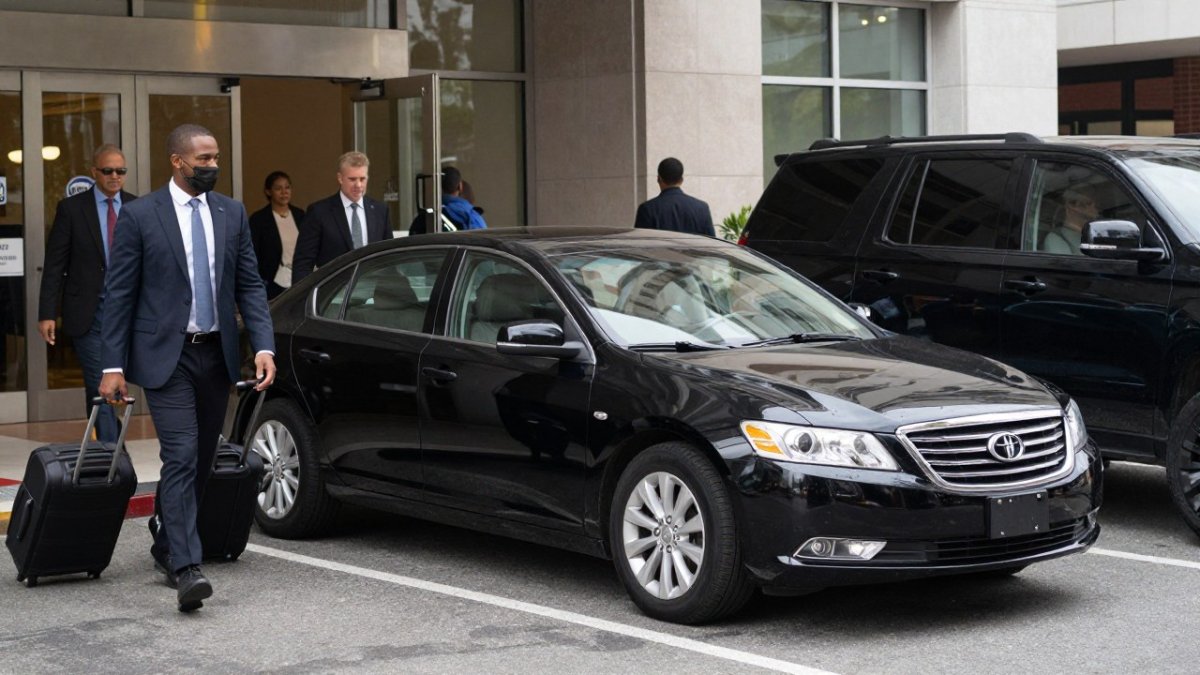
Check passenger capacity and luggage space before you book. Trade show samples, presentation cases and rolling suitcases fill a vehicle quickly.
Match the vehicle to the job. Choose larger vehicles for groups and heavy equipment. For a team of 15 or more, plan for capacity across more than one vehicle and assign one lead contact to coordinate.
Booking Steps for Executives and Event Planners
Booking a chauffeur for a conference works best when you plan early and share the details in writing. The steps below take you from first inquiry to a confirmed itinerary, and they double as a checklist for evaluating any provider you shortlist.
- List every stop. Include hotels, venues, airports and dinner locations. Note which stops are fixed (flights, keynote start times) and which can flex.
- Estimate the daily hours. Add buffer time for traffic and unplanned meetings. A common pattern is to add 30-60 minutes on each side of a fixed commitment.
- Choose the vehicle type. Base the choice on passenger count and luggage, not just seat count.
- Confirm the minimum booking. Ask whether the minimum applies per day or per trip, and whether unused hours carry over.
- Name a primary contact. Give the driver one person to call with changes, and a backup for after-hours.
- Confirm pickup details. Share the exact address, terminal, arrival window, and a mobile number for the lead passenger.
- Get the quote and terms in writing. Confirm the rate, inclusions, gratuity policy, cancellation window, and overtime rate before you sign.
Before you commit, ask each provider the same set of questions so you can compare answers side by side:
- Licensing and insurance: Are you licensed and insured to operate commercially in this market, and can you provide a certificate of insurance?
- Chauffeur screening: How are drivers screened, background checks, driving record, drug testing, and are they employees or subcontractors?
- Vehicle condition: What is the age and condition of the fleet, and what is the backup plan if the assigned vehicle is unavailable?
- Change and cancellation terms: What is the cancellation window, and what happens if the event schedule shifts by a day?
- Wait-time and overtime policy: How is wait time billed inside and outside the hourly block, and what is the overtime rate?
- Communication: How do changes reach the driver during the event, phone, app, or dispatcher, and what is the response time?
- Confidentiality: What is the policy on passenger privacy, and will the chauffeur sign a confidentiality agreement if asked?
Keep a shared itinerary that your team can update, and send the final version to the provider at least 24 hours before the first pickup. A single source of truth prevents missed pickups, and a written confirmation protects you if the schedule changes.
Watch out: verbal changes made directly to a chauffeur during a busy event can be lost between stops, so route every schedule change through the named contact and confirm it in writing.
The steps below take you from first inquiry to a confirmed itinerary, and they double as a checklist for evaluating any provider you shortlist.
| Step | What to do | Time or frequency |
|---|---|---|
| List every stop | Include hotels, venues, airports and dinner locations | Before booking |
| Estimate daily hours | Add buffer time for traffic and unplanned meetings | 30-60 minutes each side of fixed commitments |
| Choose vehicle type | Base the choice on passenger count and luggage | Before booking |
| Confirm minimum booking | Ask if the minimum applies per day or per trip | Before signing |
| Name a primary contact | Give the driver one contact and a backup | After hours needs a backup |
| Confirm pickup details | Share address, terminal, arrival window and mobile number | Before first pickup |
| Get quote in writing | Confirm rate, inclusions, gratuity, cancellation and overtime | Before signing |
| Send final itinerary | Share the updated itinerary with the provider | At least 24 hours before first pickup |
What Drives Chauffeur Service Cost
Several factors shape the final price. Vehicle size is the biggest driver, since larger vehicles cost more to run. Booking length matters too: longer blocks often lower the hourly rate.
Other factors include travel distance, the time of day, and extras such as airport wait time, tolls and gratuity. Requests outside normal hours or in peak conference weeks can also raise the rate. Ask for an itemized quote so you can compare providers fairly.
Watch out: a low hourly rate can hide extra charges. Compare the full estimate, not the headline number.
Planning for Delays, Privacy and Itinerary Changes
Delays happen. Build buffer time between stops, especially before flights and keynote sessions. Tell your driver about any deadline you cannot miss so they can plan around it.
Executives often need privacy during transit. Ask each provider what privacy options its vehicles offer for calls and document review.
Set a clear process for changes. Decide who can alter the schedule, and how the driver receives updates. Confirm the change in writing so the driver and your team stay aligned.
Choosing Your Roadshow Transportation Partner
Vet any provider before you commit. Ask how they handle last-minute changes, what their cancellation terms are and how they confirm pickups. Prestige Black Car Service is a Tampa Bay provider founded by locals in 2023, offering luxury cars, sprinter limos and party buses, with a 4.6 rating from 122 reviews.
Past clients describe their drivers as awesome, and one said the service was by far the best they had used across Tampa and Pinellas. One client described a driver who set the mood with music, lighting and champagne for a concert trip.
Request a written quote, confirm the vehicle and driver, and book early for peak conference dates. To get a quote for your roadshow or conference, contact Prestige Black Car Service and share your itinerary.
Frequently Asked Questions
How far in advance should you book chauffeur service for a conference?
Book as early as your event schedule is firm, especially for multi-day roadshows or conferences that coincide with peak travel periods. Early booking gives the provider time to assign vehicles and drivers for every day of the event and to confirm the fleet capacity you need. Share your full itinerary when you book, including airport arrival times, venue addresses, and any planned stops, so the provider can build a schedule around them. Last-minute requests are sometimes possible, but availability for larger vehicles and multiple cars is far more limited.
Should you book an hourly or as-directed chauffeur service for a roadshow?
Hourly booking works best when your schedule has defined pickups, drop-offs, and a rough total time on the road. As-directed service suits roadshows where meetings run long or change often, because the chauffeur stays with your group and adjusts to the day rather than following a fixed route. Many planners use hourly service for airport transfers and as-directed service for the full event day. Ask any provider how it bills idle or waiting time and what the minimum booking duration is before you commit.
What information should you provide when booking chauffeur service for a conference?
Provide the number of passengers, the amount of luggage, the vehicle type you prefer, and every pickup and drop-off address with times. Include the name and contact number for the person on site, the flight numbers for airport pickups so the driver can track delays, and any special requests such as child seats or accessibility needs. For corporate events, list the names of the executives or VIP guests so the provider can confirm the right vehicles and drivers in advance.
What type of vehicle is best for conference transportation?
The right vehicle depends on group size and luggage. Executive sedans suit one to three passengers traveling light, while luxury SUVs handle larger loads and more luggage. For groups of about ten to fifteen people, a sprinter-style van or limousine often makes more sense than several sedans, since everyone stays together and arrives at the same time. Confirm passenger and luggage capacity with the provider rather than relying on seating counts alone.

‹ Back
Recent Posts
-

Chauffeur Service for Roadshows and Conferences: A Planning Guide
November 18, 2026
-

Hourly Chauffeur Service for Executives: A Practical Guide
November 17, 2026
-

7 Car Service Moves for Unexpected Travel Plans
November 16, 2026
-

What to Include in a Corporate Travel Policy
November 15, 2026
-

How to Coordinate Wedding Guest Shuttles in Tampa
November 14, 2026